Snap: listing products during a live show
List the product. Keep the show moving.
Sellers on Tilt present products live while viewers buy or bid. A listing form competes with all of that. The question behind Snap was how to prepare a listing without pulling the seller out of the show.
My role: I owned the design, working alongside a product owner and engineering team. I interviewed sellers directly and worked closely with business development, who brought feedback from their daily seller conversations.
The first attempt interrupted the show
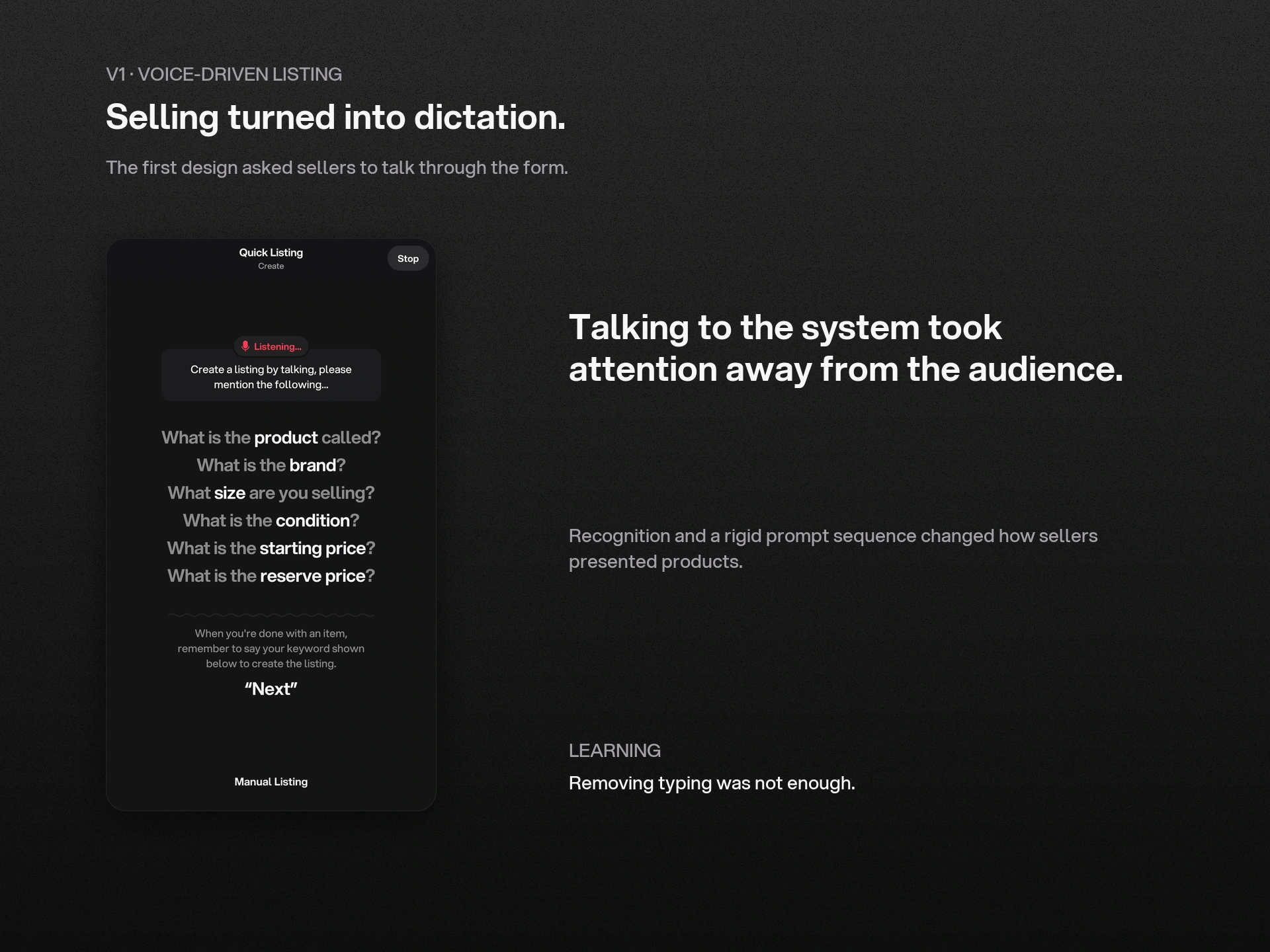
We first tried replacing typing with speech. Sellers described product details to the system, then said “Next” to create the listing.
Recognition was not fast or accurate enough. Sellers slowed down and spoke more robotically to make the system understand them. Removing the keyboard had introduced a different kind of effort, pulling attention away from the audience.
Recognising a product wasn’t enough
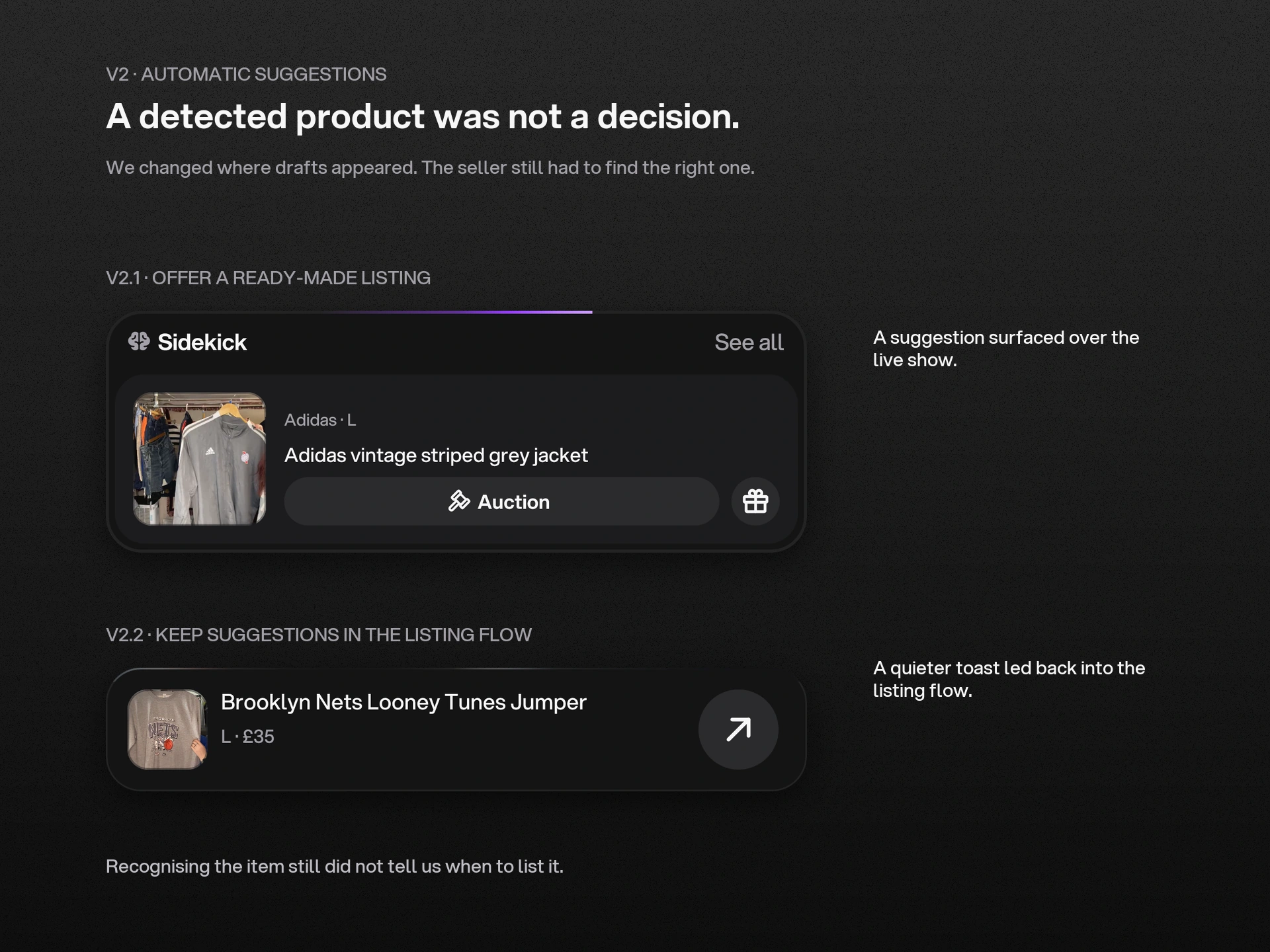
We then tried preparing listings from the conversation already happening. V2.1 surfaced a detected listing in a pop-up. V2.2 moved suggestions into the listing flow, with a quieter toast leading back to them.
But recognising a product wasn’t the same as knowing the seller wanted to list it. A seller might show several items to gauge interest before choosing one. Moving the suggestions around still left that question unanswered.
The missing piece was the seller’s timing
Sellers were already describing items to their audience. That conversation gave us the product details; what was missing was a signal that this was the item they wanted to sell.
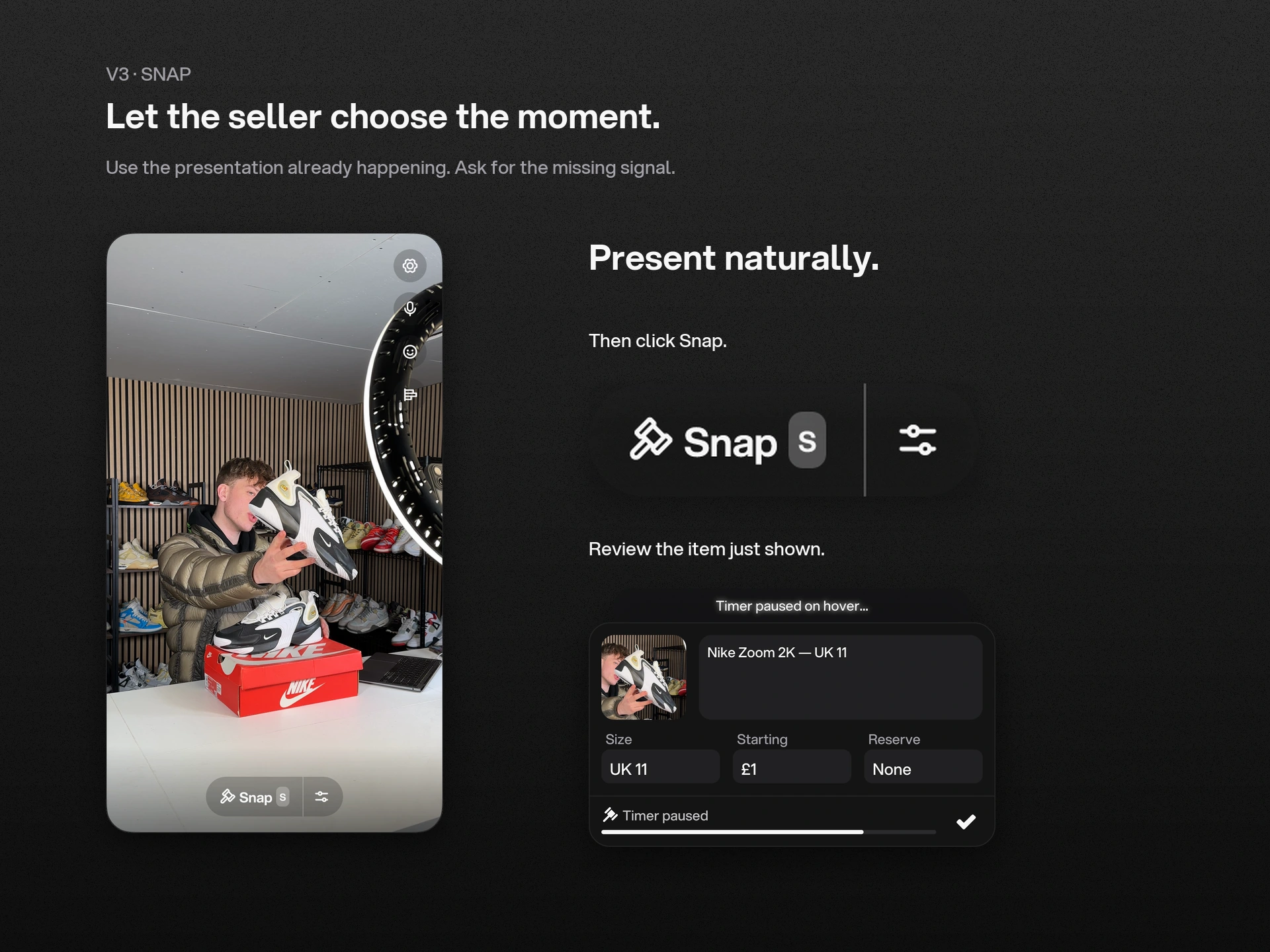
I designed the capture flow around a click. Snap used the recent speech and video to prepare the listing, and the seller chose the moment. They could keep talking to their audience in their own way.
The next listing needed fewer decisions
I separated Snap’s main action from its presets. Sellers could create the next listing directly, with a second control for recurring settings.
Presets carried the sale format, default prices and timing into future listings. A price spoken for an individual item could override the saved price. The generated listing appeared over the live video, ready to check.
That removed repeated setup, but made the next step important: sellers needed a chance to catch a wrong detail before it became a live sale.
A short timer didn’t fit every setup
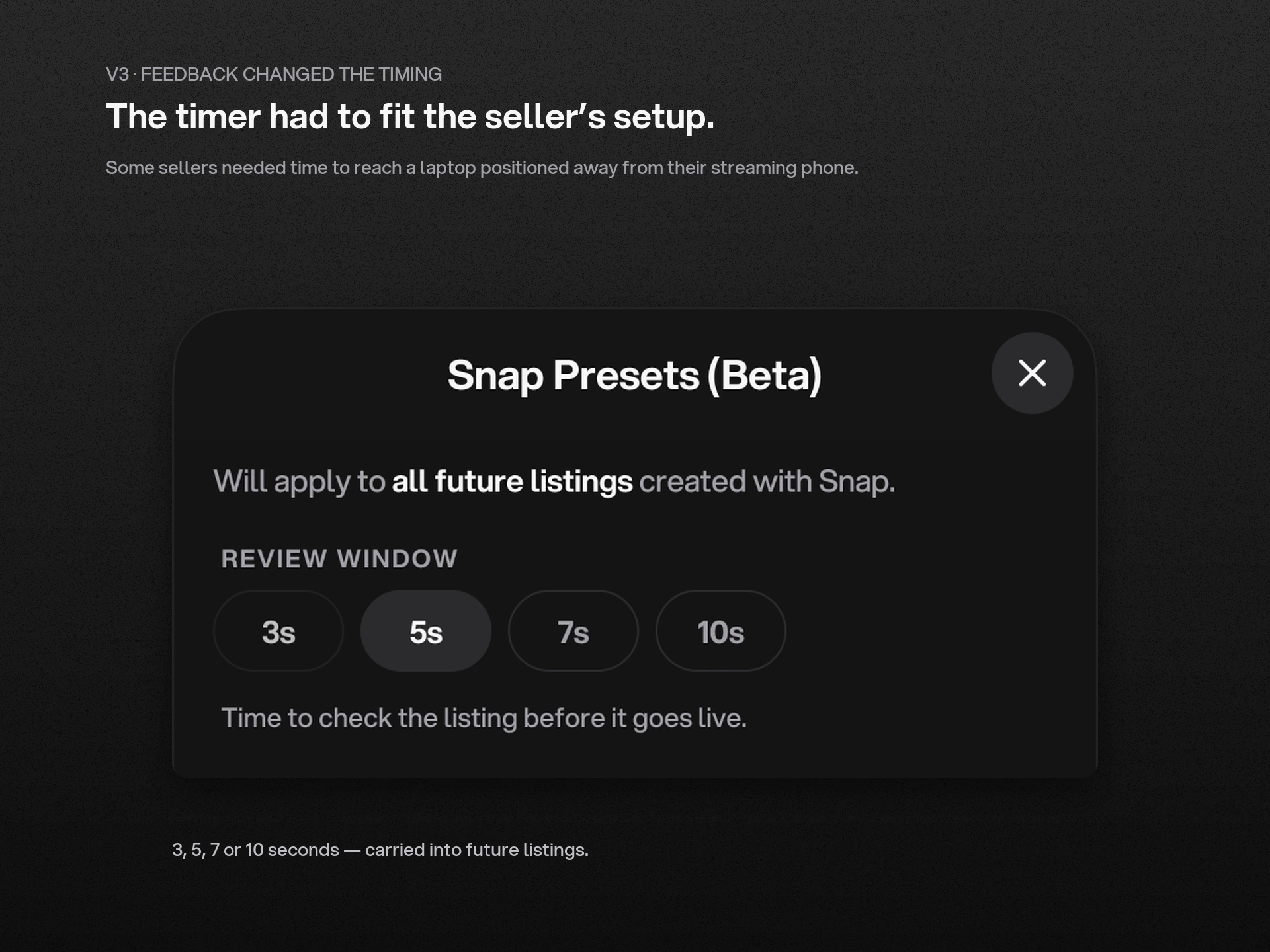
The initial design gave sellers a fixed review window. Feedback showed why one duration did not fit every setup: some sellers needed to reach a laptop positioned away from their streaming phone.
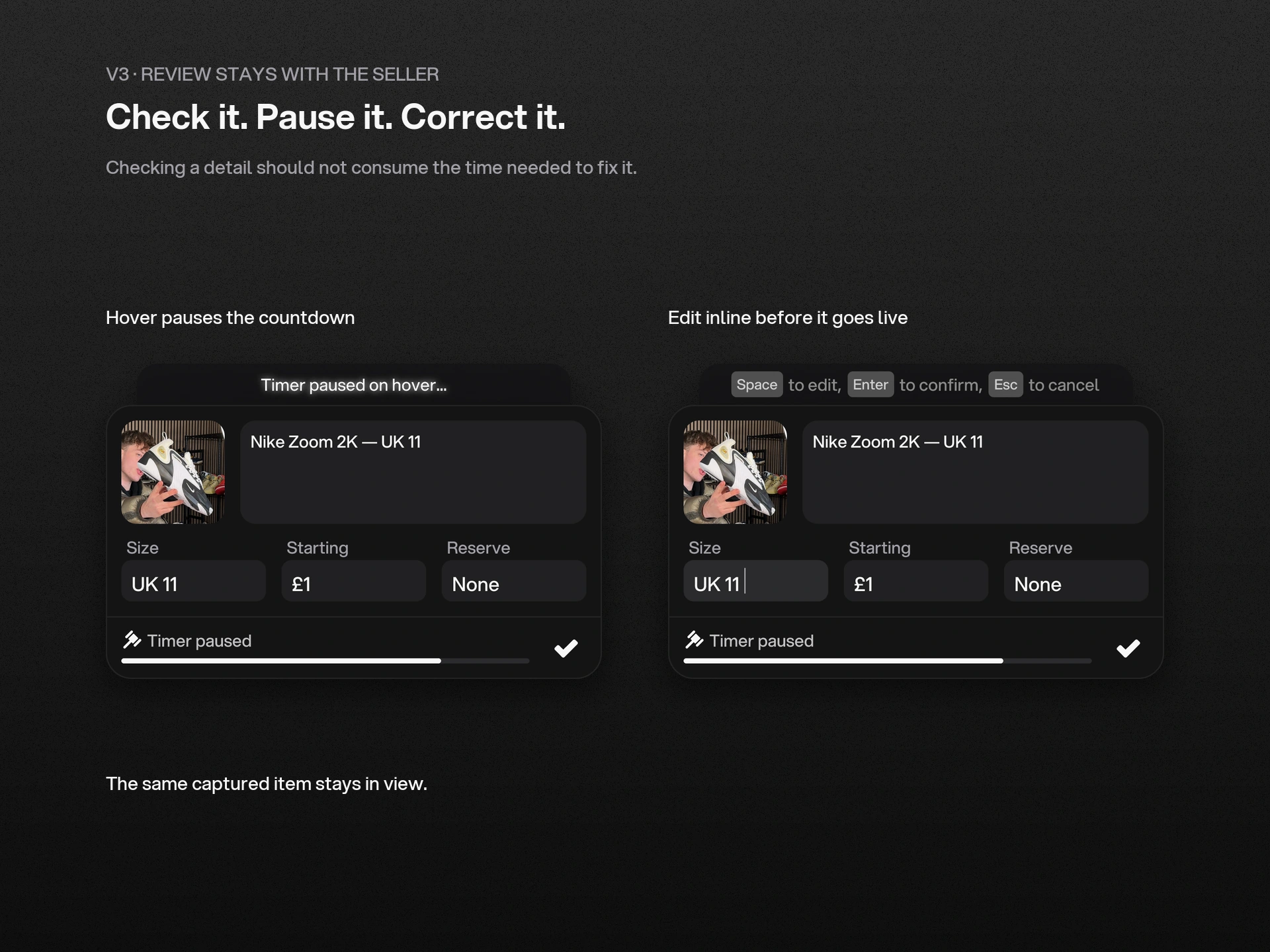
I designed a configurable review window and worked with the frontend engineer on the duration control. The interaction also paused the countdown on hover and during edits, so sellers could check and correct a listing without racing the timer.
I needed to see more than completed listings
A completed listing only told part of the story. I pulled database data and built a visual dashboard to follow selected sellers across complete streams.
I looked at failures, switches to other listing methods and the difference between items listed and sold. Together with seller interviews and feedback from business development, this helped us identify friction, refine the product and improve the accuracy of generated details.
Where we landed
The flow became clearer once we stopped asking the system to decide everything. It prepared the details from the conversation, while the seller chose when to list and had a chance to correct the result.
In September 2026, Snap-created listings accounted for approximately 18% of Tilt’s recorded paid merchandise value. The work continued through seller interviews and stream analysis, which helped us see what still got in the way.