Box breaks: keeping ownership clear
One box. Many buyers. Clear ownership.
A seller opens one trading-card box live. Several buyers have paid for spots that determine which cards they receive. To make box breaks work in Tilt, I had to connect that shared event to individual purchases that would still make sense when the show was over.
My role: I owned the design end to end, working alongside a product owner and engineering team. I also worked closely with business development, who spoke with sellers daily, and interviewed sellers directly.
The reveal was only part of the problem
The idea came from a founder. The format was niche, with its own rules for selling spots, assigning cards and revealing what each buyer got. I worked through those rules and mapped the experience from seller setup to the final shipment.
Sellers were using external randomisers, spreadsheets and manual tracking. Bringing the whole flow into Tilt meant keeping the seller portal, buyer app and order system in step. The reveal was the visible part; the harder question was what each person owned before and after it.
An entry and a spot weren’t the same thing
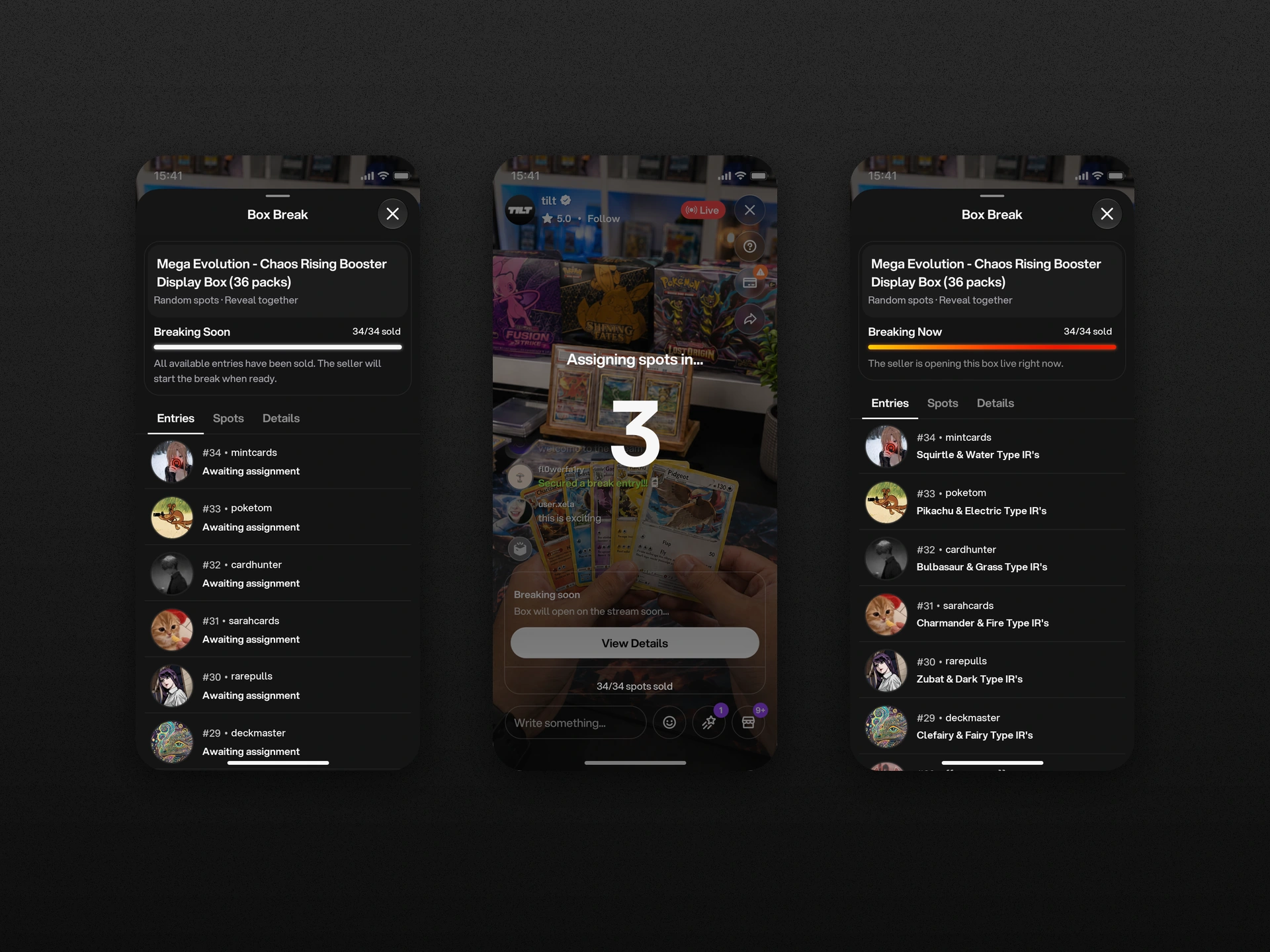
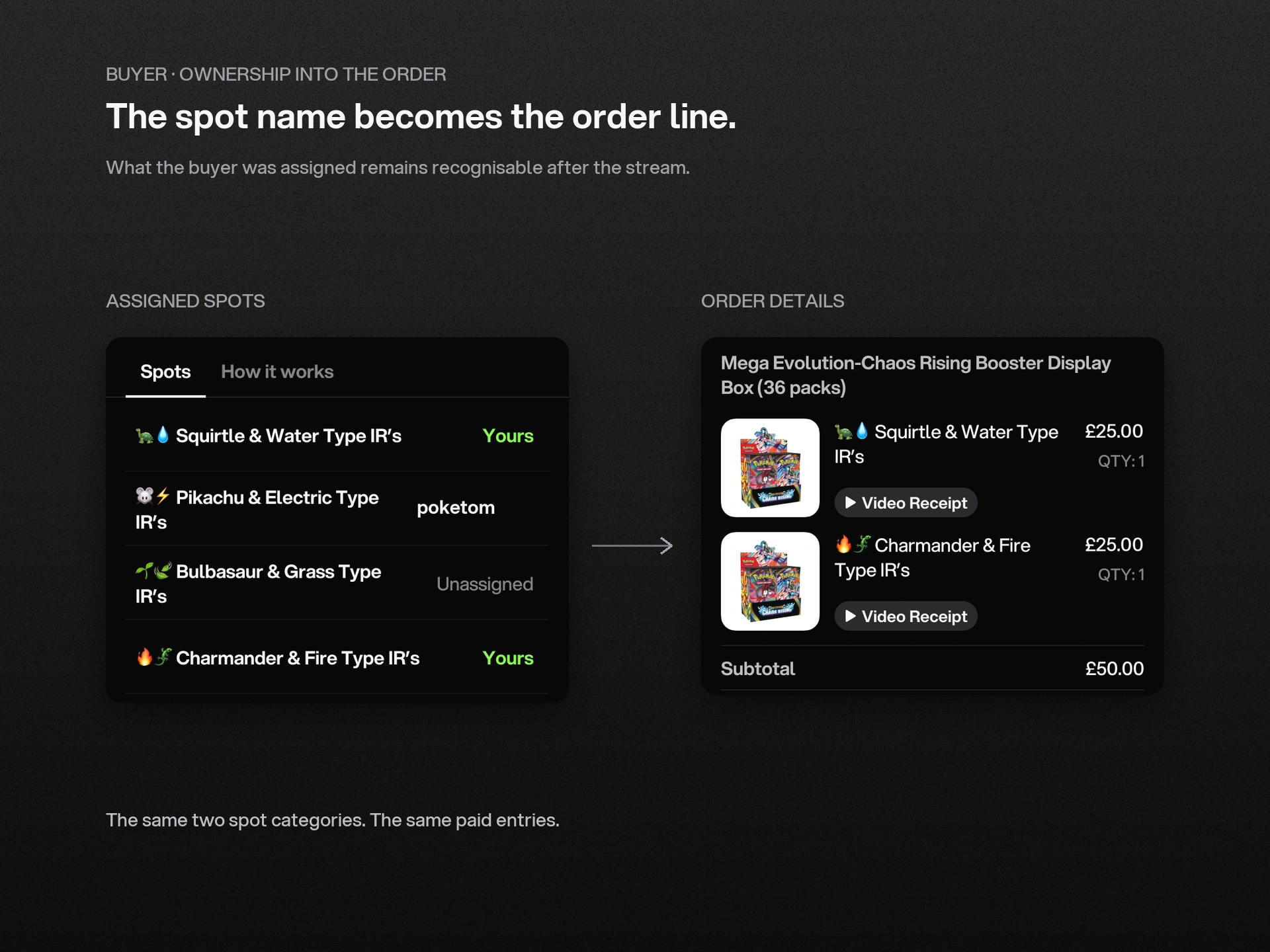
The useful distinction was between what a buyer paid for and what they were assigned. In V1, they bought an entry, then received a random spot once payment succeeded. Someone buying several entries needed to recognise each one.
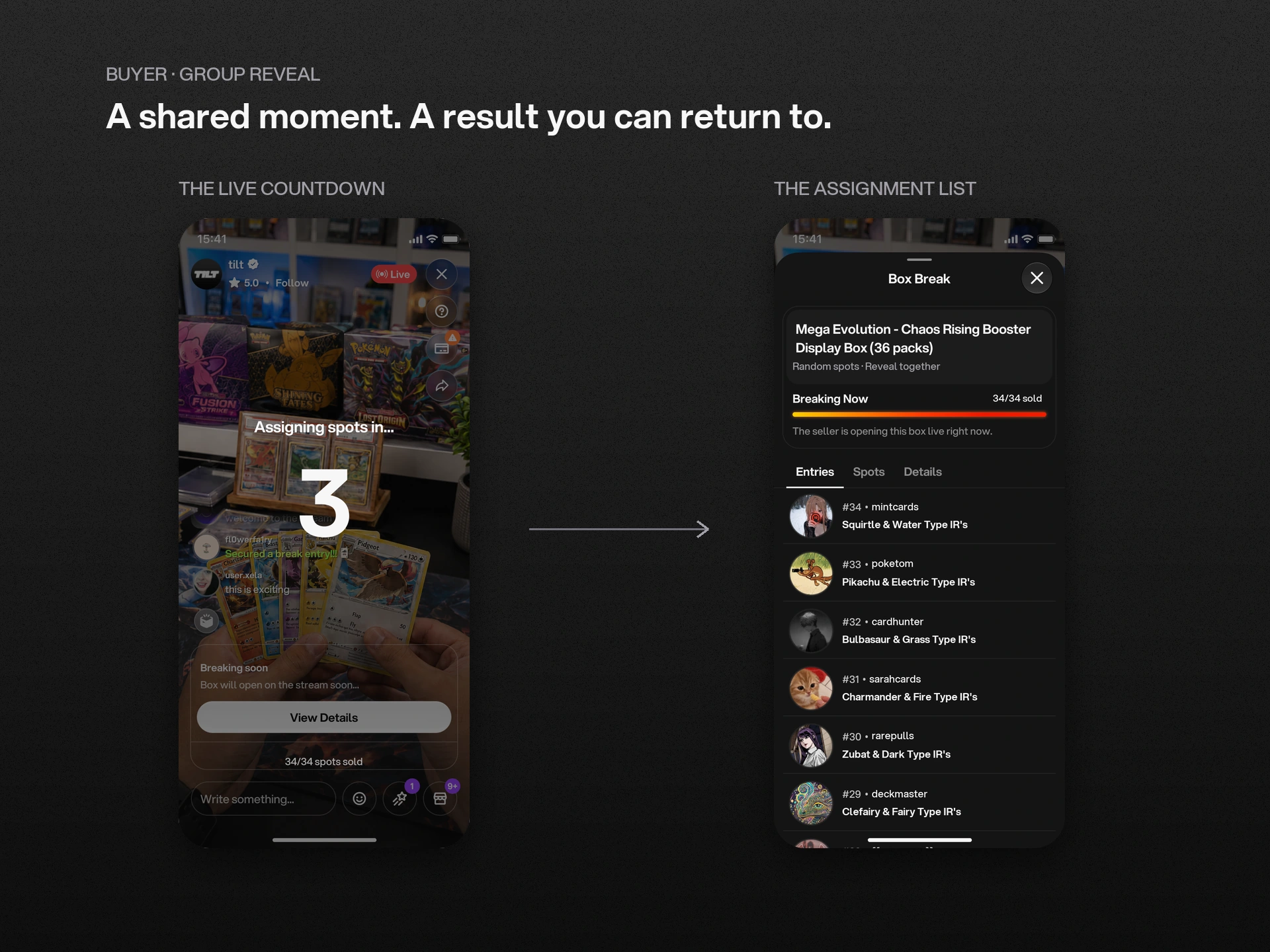
I kept those two things connected. Buyers could return to the spot list to see their assignments, and the assigned spot became the item label in their order, grouped under the break’s title. The same purchase made sense during the show and afterwards.
The same record had to survive shipping
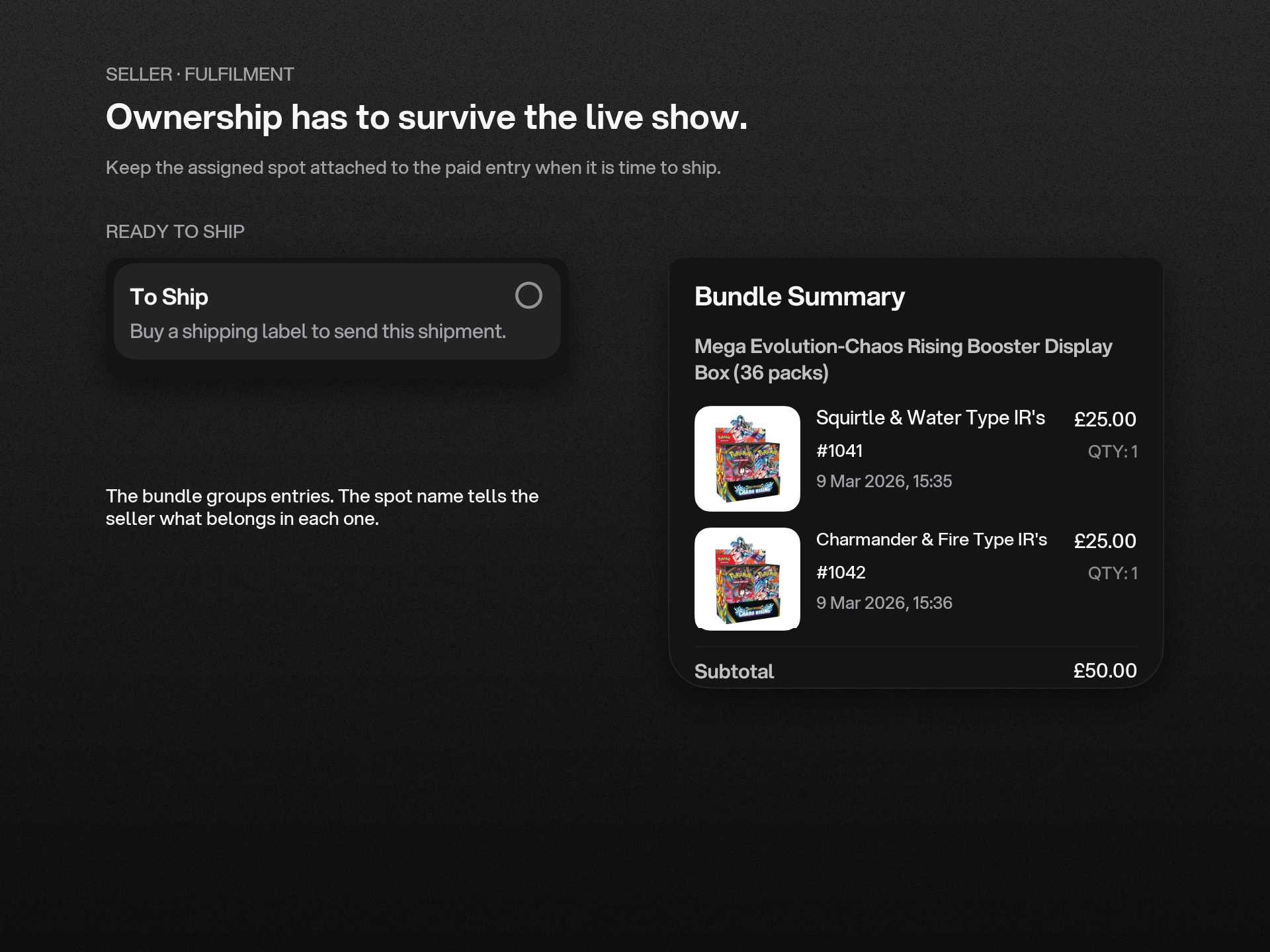
Sellers needed that same information to sort and send the cards after the show. I carried the entry and its assigned spot into Tilt’s existing fulfilment bundles, so grouping purchases for shipping kept each buyer’s allocation visible.
The format needed new buying and reveal behaviour, but the shipping work could stay in the tools sellers already used.
Sellers wanted to hold the reveal
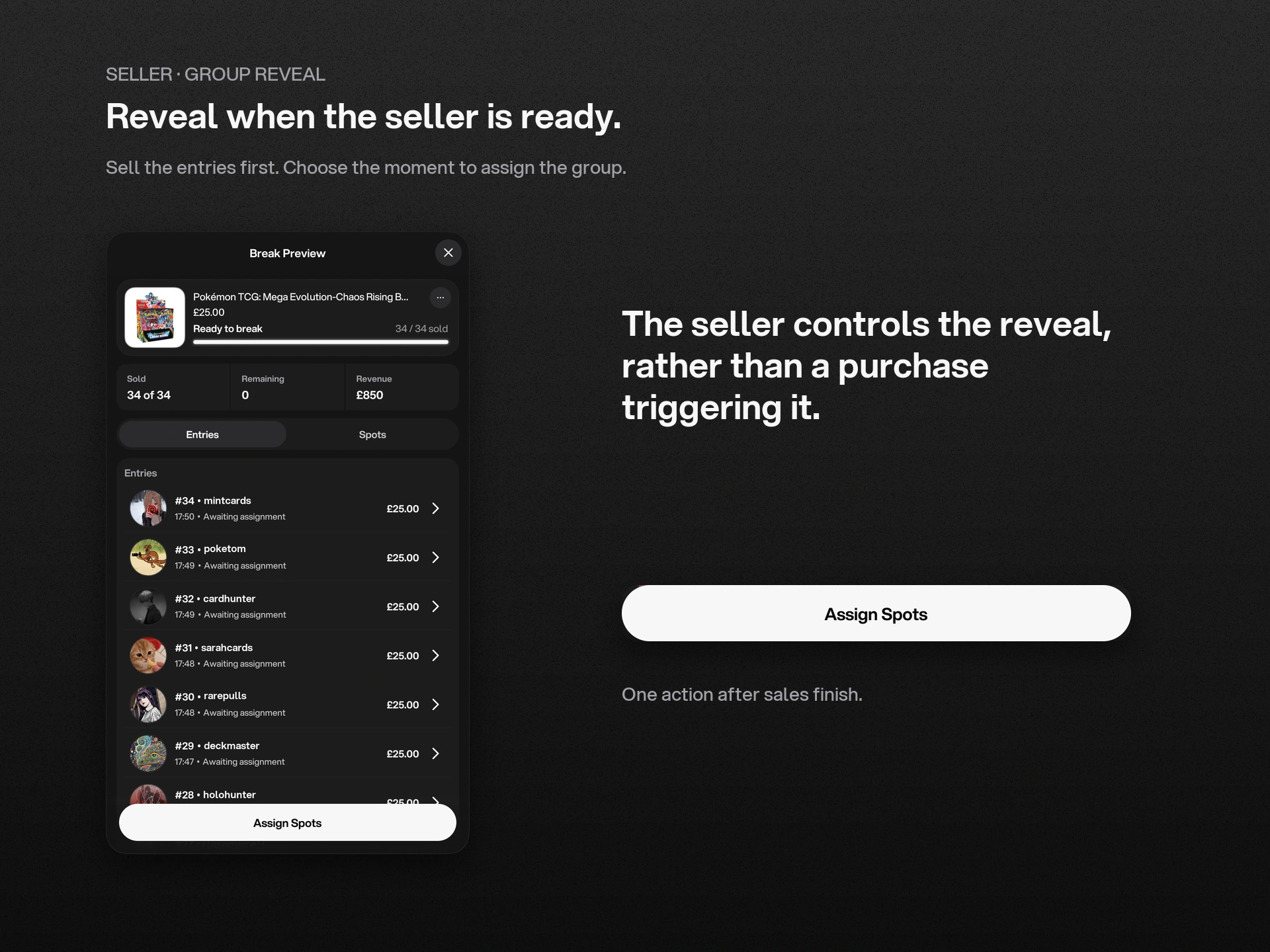
The early design revealed each spot after purchase. Sellers also wanted to hold the reveal until sales finished, so the group could discover their assignments together.
I designed the mode control and connected it to buyer states. For a group reveal, the seller selected Assign Spots; buyers saw a countdown, followed by the break detail view and a persistent list of assignments.
I prototyped the reveal to work through its pacing and how the list settled. The handoff connected seller actions, buyer screens, banners and chat messages, giving engineering and a motion collaborator a shared reference for the behaviour.
The next request changed the purchase
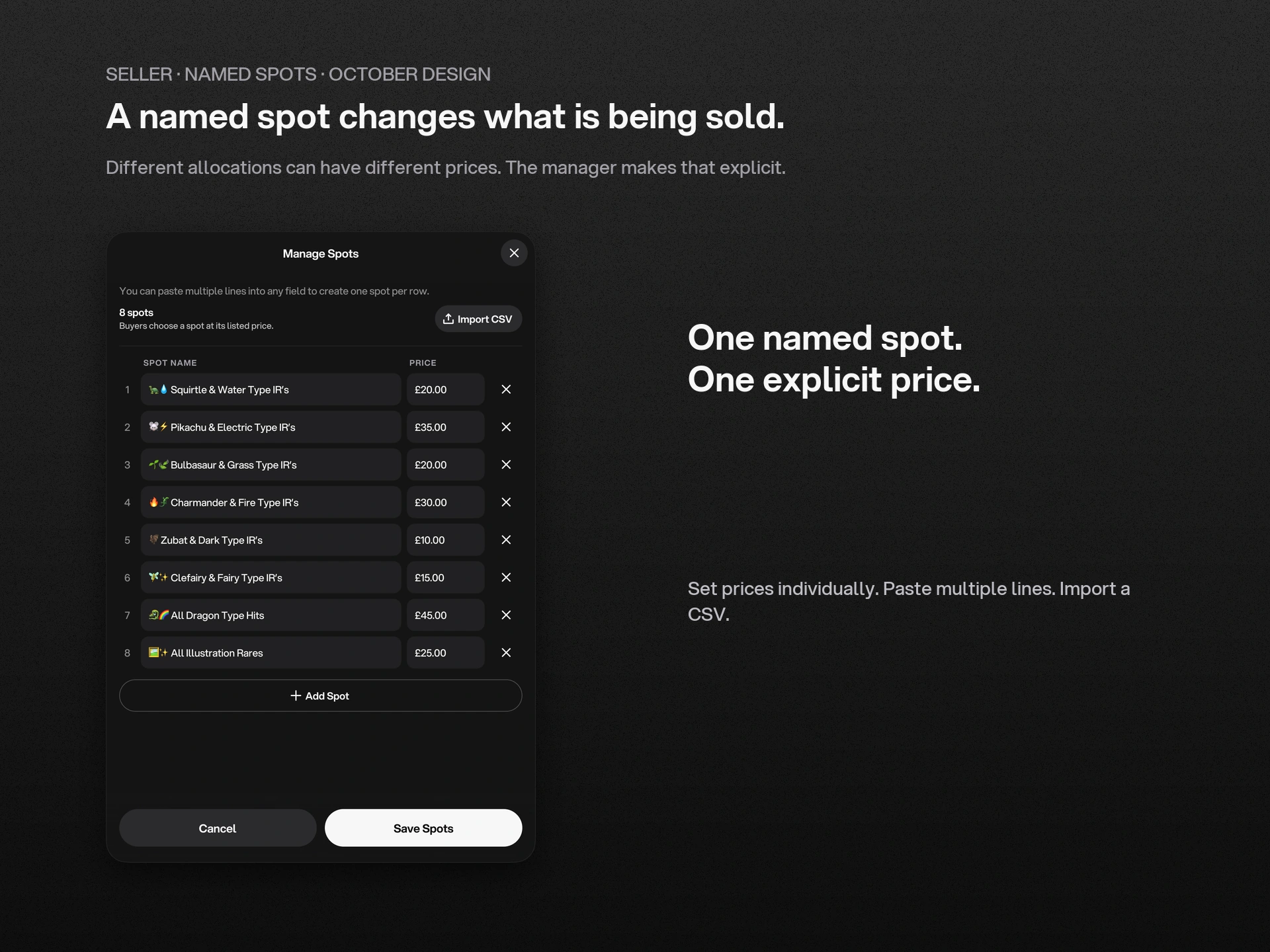
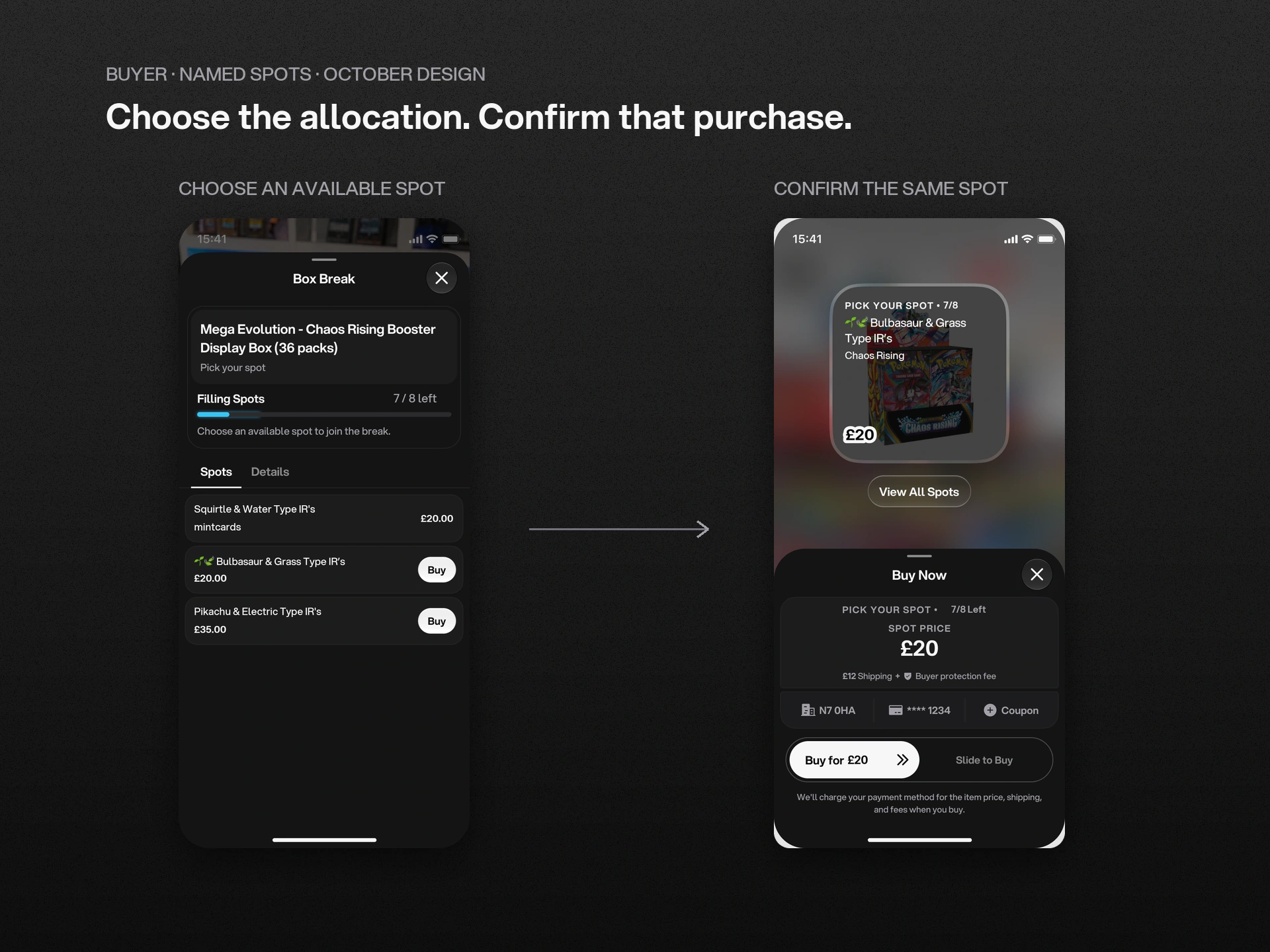
Seller feedback led to a later design for choosing a specific spot. This changed the purchase itself: the buyer knew their allocation in advance, and each spot could have a different price.
I designed a spot manager with individual prices, multiline paste and CSV import. Sellers could prepare the allocations and their prices together, or start an auction for a specific spot.
The choice had to stay clear at checkout
For fixed-price sales, the buyer selected an available spot and confirmed that named purchase. The chosen allocation and its price stayed visible through checkout.
The later design kept the same rule as the original flow: a spot belonged to the buyer once payment succeeded.
What happened after release
V1 was well received, with no UX issues reported after release. In September 2026, around 12% of active Trading Card Games sellers ran at least one box break.
The trading-card category grew significantly after release, and the team decided to pursue TCG further. What started as a niche founder initiative had become a format sellers could run inside Tilt, from the first spot sold to the cards being shipped.